01
The Hulls
Two longitudinal hulls form the buoyant foundation of the platform, with potential internal volume for practical onboard use.
PORT + STARBOARD
A modular approach to catamaran foundations, combining a twin-hull structure, connecting components and a deck platform ready to become the starting point of your project.

The Marinero Sea concept divides the main catamaran structure into separately manufacturable components that form a complete platform after assembly.
Two longitudinal hulls form the buoyant foundation of the platform, with potential internal volume for practical onboard use.
A structural connection system links the hulls and distributes loads across the assembled platform.
The deck provides a working and usable surface that can accommodate approved fittings and upper-structure arrangements.
The modular architecture is intended to simplify the production, handling and eventual assembly of the platform's primary elements.
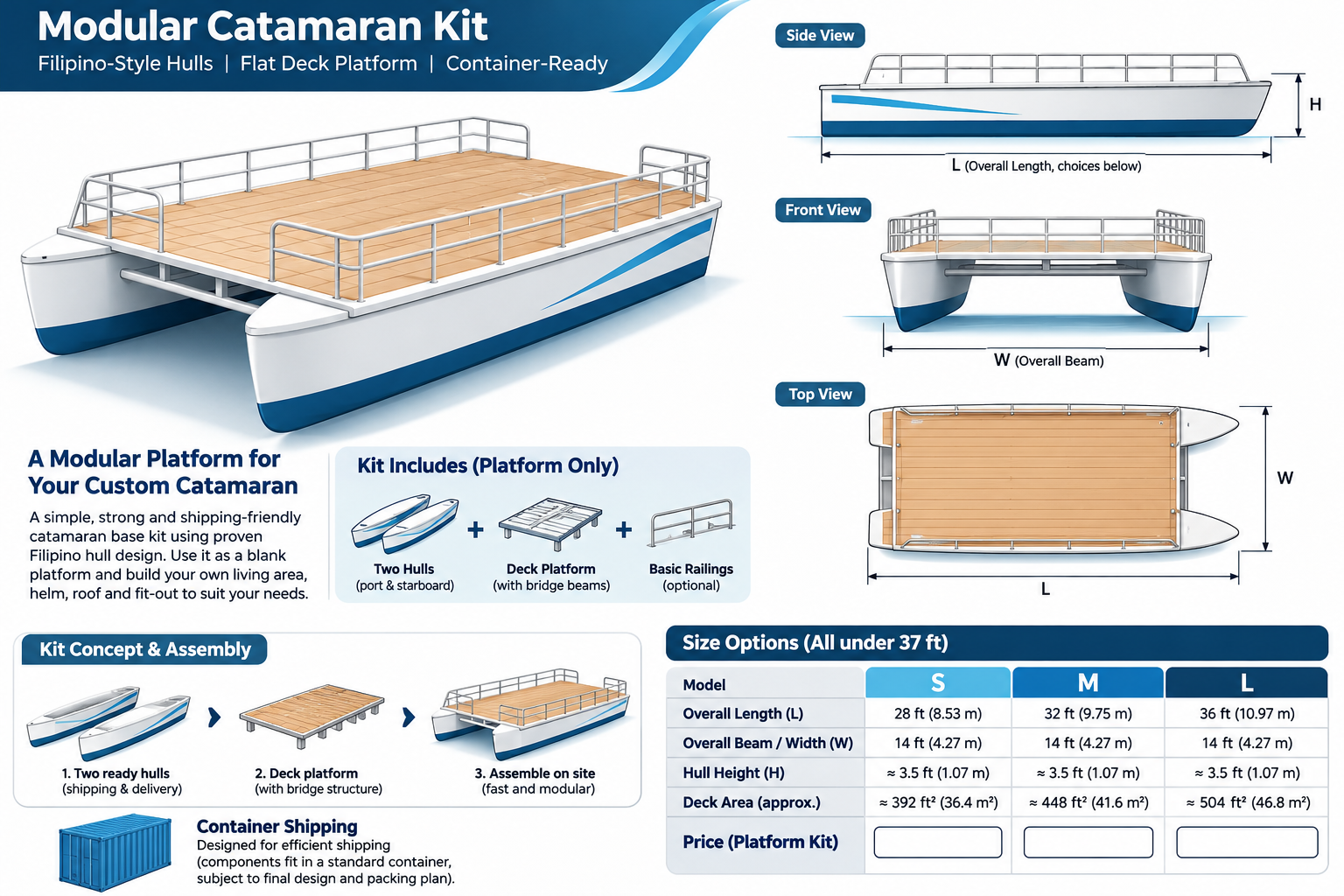
Manufacture and prepare the two hulls to the approved platform specifications.
Align the hulls using the required spacing and support arrangement.
Install and secure the connecting system according to engineered assembly instructions.
Fit the deck components and complete required inspections before any further work.
This sequence illustrates the intended assembly concept, not a complete installation manual. Certified design information, tooling requirements, lifting procedures, connection specifications and inspections must be established before production or assembly.
The hulls are a fundamental part of the marine structure, but their internal volume may also offer useful space for equipment, storage or carefully designed accommodation.
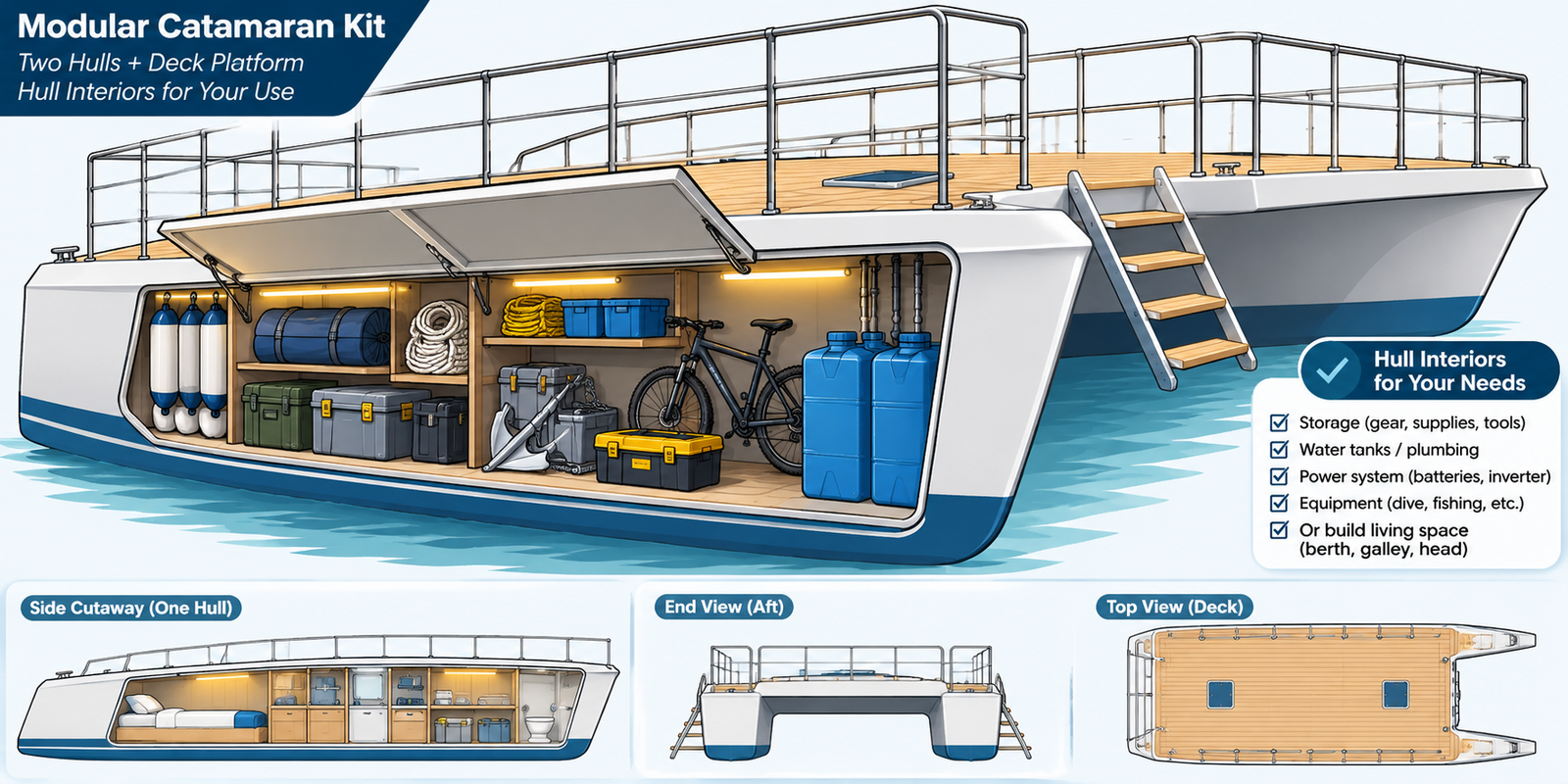
Organized compartments for ropes, fenders, anchors, tools and equipment.
Potential spaces for onboard electrical, water and mechanical equipment.
Compact accommodation concepts in hulls designed for safe human occupancy.
Layouts determined by the final hull dimensions and project requirements.
Internal capacity, watertight compartmentation, ventilation, escape routes, floor levels and other safety requirements must be defined before hull interiors can be offered for accommodation.
Access arrangements can be planned to suit how each hull will be used, from simple equipment compartments to enclosed interior spaces.
Cutting or altering hull structures is not automatically permitted. All openings and access systems must be incorporated into an approved design that maintains structural and watertight integrity.
The deck connects the hulls into one usable platform and forms the foundation for the final vessel's layout, fixtures and approved upper structures.

Clear deck layouts for simple projects and flexible future use.
Accommodation, shading, cabins or other fittings designed within the approved platform limits.
Suitable locations for controls, fittings, safety equipment and other required systems.
Separating the platform into major components creates the potential for more flexible transport and assembly arrangements.
Our development objective is to explore practical shipping solutions, including container-oriented configurations where the final dimensions allow.
A hull shorter than 37 feet is not automatically suitable for a standard shipping container. Actual container fit depends on internal length, door clearance, hull beam, hull height, packaging, loading method and weight.
The same modular philosophy can support different projects, provided the selected configuration is compatible with the final engineered platform.
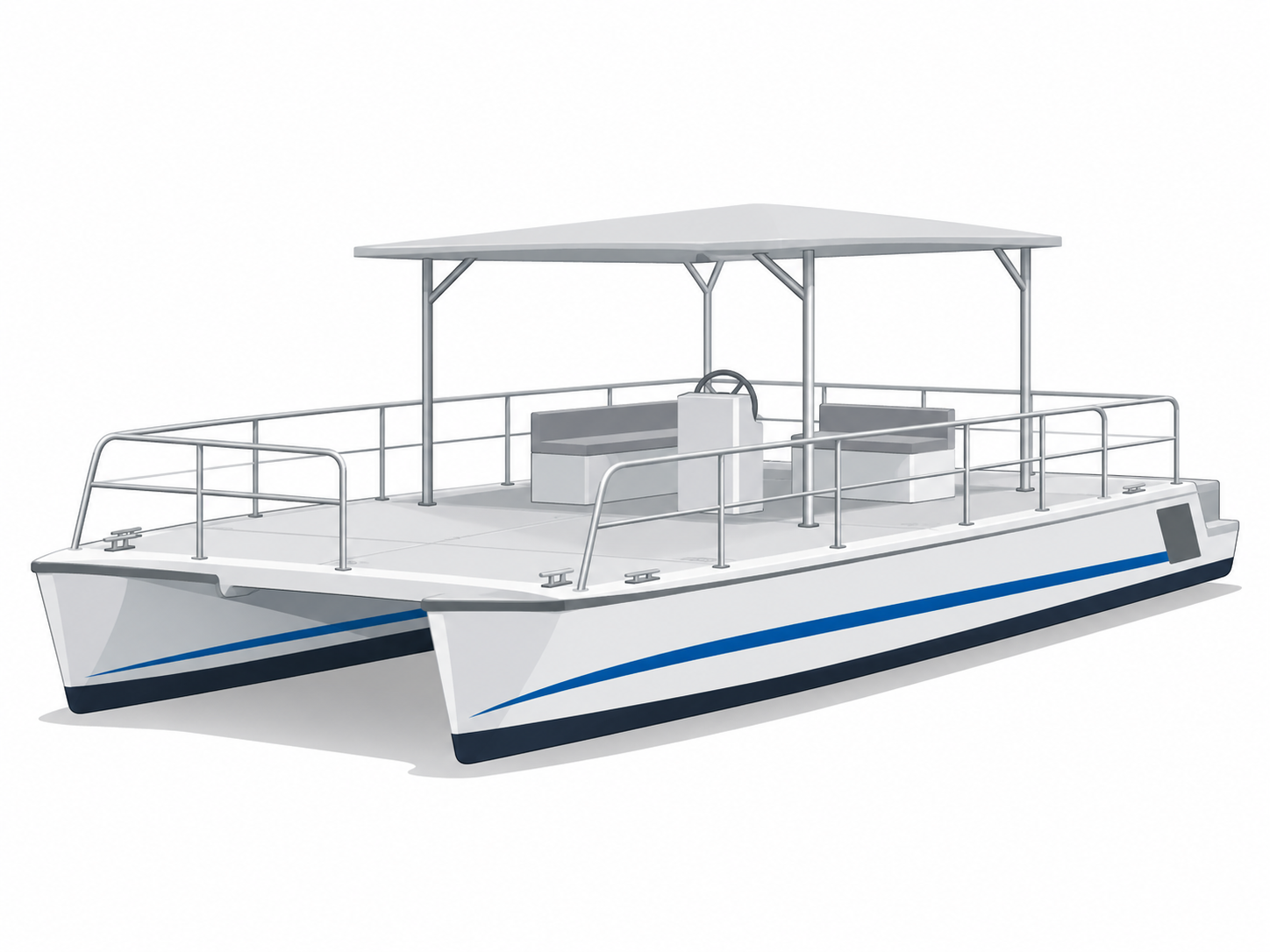
Simple roof and canopy arrangements for recreation and outdoor use.
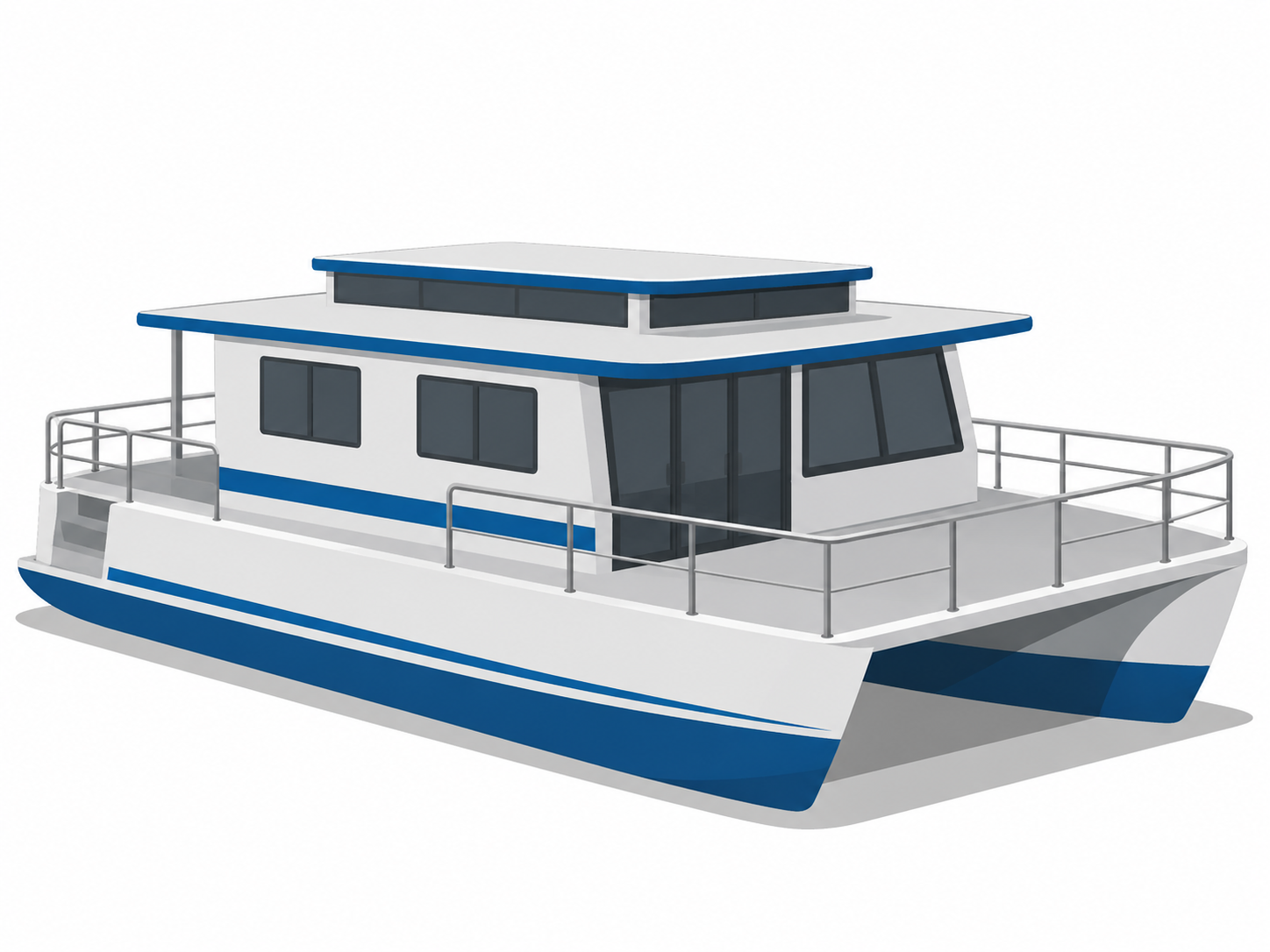
Single-level cabins, workspace or accommodation concepts.
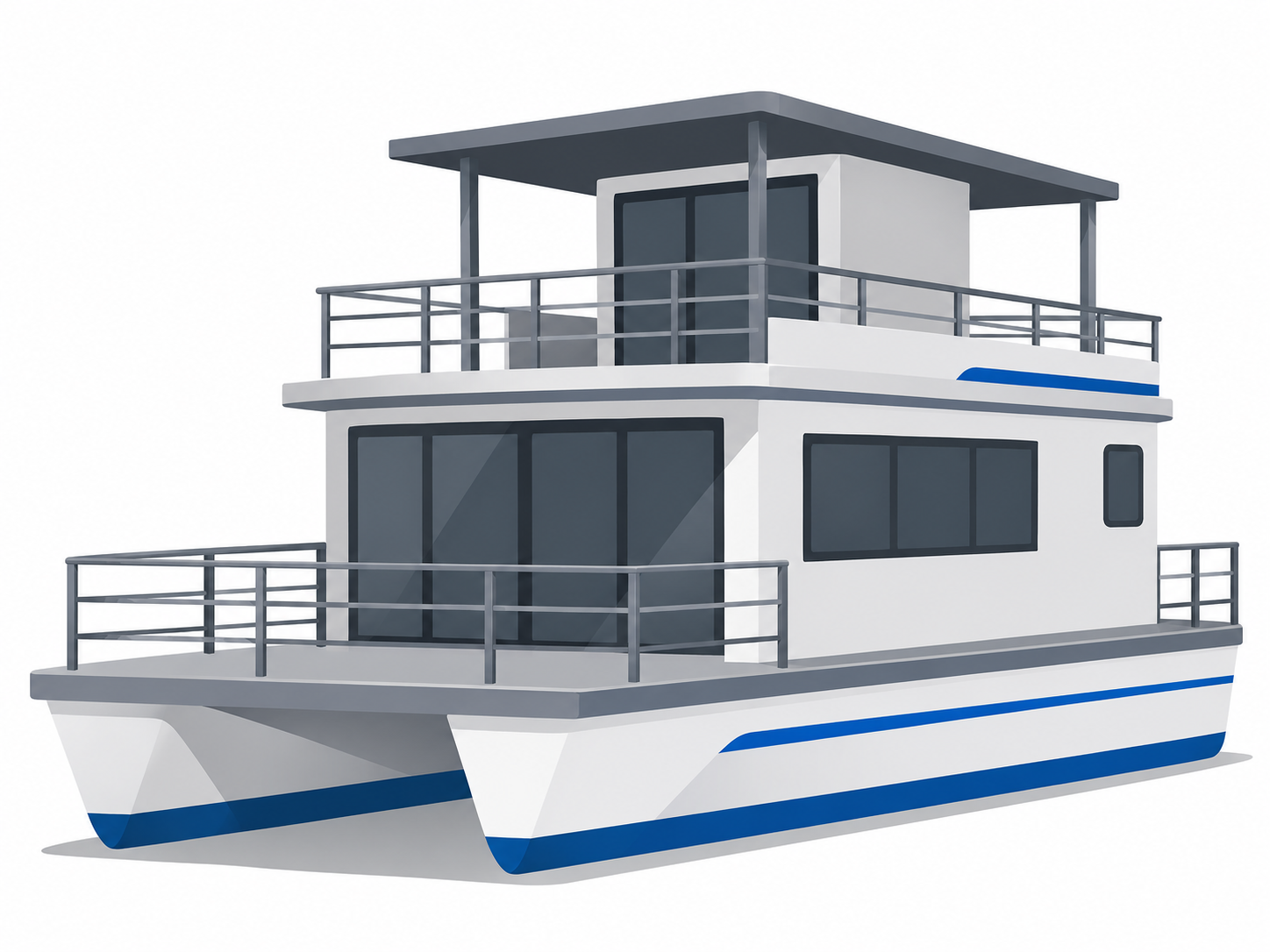
Upper terraces or additional structures subject to stability and engineering approval.
For builders and marine businesses, a modular platform can become the starting point for a finished product developed under their own identity.
Marinero Sea is developing its platform supply concept for customers who want to create and market their own boats, floating accommodation units and marine structures.
Useful answers before planning a custom marine project.
The kit concept includes assembly at the destination. Structural joining, lifting, waterproofing and verification should be performed by competent professionals using the final approved instructions.
Propulsion is outside the proposed base kit. Engine power, mounting, steering, weight and installation must be compatible with the completed vessel design.
Any structural changes require approval against the engineering design. Unreviewed openings, supports or weight additions can compromise safety.
That is a possible development direction, but actual accommodation suitability requires sufficient internal dimensions, ventilation, safe access, emergency escape and appropriate marine construction.
Two-level layouts are currently illustrative concepts, not standard approved features. Elevated structures require particular attention to stability, center of gravity, wind loading and structural strength.
Container-friendly construction is a development objective, but transport dimensions and packing plans have not yet been finalized. Compatibility must be established for each production model.
Tell us about your project, proposed configuration or professional supply requirements.